Planning Cuts Automation Project Risk: A Control Engineering Perspective on Software Design and Development
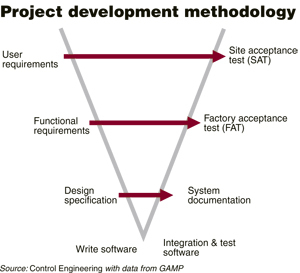
Automation projects in industrial and manufacturing environments are crucial for enhancing efficiency, reducing costs, and improving safety. However, these projects are often complex and susceptible to risks such as budget overruns, timeline delays, and technical failures. Effective planning and a structured approach to software design and development are essential to mitigate these risks. This article explores key strategies for minimizing automation project risk through careful planning in the context of control engineering.
- Comprehensive Requirements Analysis: The foundation of any successful automation project lies in clearly defining requirements. In control engineering, this involves collaborating with stakeholders—including operators, maintenance teams, and management—to outline functional and non-functional specifications. For example, specifying response times, safety interlocks, and integration with existing systems can prevent scope creep and rework during development.
- Modular Software Architecture: Adopting a modular design approach reduces complexity and enhances flexibility. By breaking down the software into reusable components—such as drivers for sensors, control algorithms, and user interface modules—teams can isolate issues, simplify testing, and facilitate future upgrades. This aligns with control engineering best practices, where systems like Programmable Logic Controllers (PLCs) and Distributed Control Systems (DCS) benefit from modular programming.
- Risk Assessment and Mitigation Planning: Proactively identifying potential risks—such as hardware incompatibility, cybersecurity threats, or skill gaps—allows teams to develop contingency plans. Techniques like Failure Mode and Effects Analysis (FMEA) can be applied to software design, ensuring that critical failures are addressed early in the development lifecycle.
- Iterative Development and Testing: Embracing agile or iterative development methodologies enables continuous validation of software components. In control engineering, this means conducting simulations, such as using digital twins, to test control logic under various scenarios before deployment. Regular testing reduces the likelihood of costly errors during commissioning.
- Documentation and Training: Thorough documentation of software design, code, and operational procedures is vital for long-term maintainability. Additionally, training end-users and maintenance staff ensures smooth adoption and reduces operational risks post-implementation.
In conclusion, meticulous planning in software design and development is a powerful tool for cutting automation project risks. By focusing on requirements, modularity, risk management, iterative testing, and documentation, control engineers can deliver robust, reliable automation solutions that meet business objectives while minimizing unforeseen challenges.
如若转载,请注明出处:http://www.bizcrossroad.com/product/2.html
更新时间:2026-10-15 09:12:10